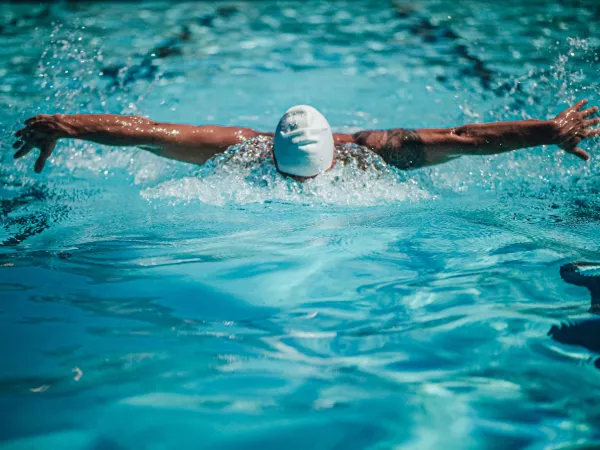
Rhythm connects the pieces of the stroke
Butterfly is often treated as a strength stroke because both arms recover over the water together. A large part of the difficulty, however, appears when the swimmer has to lift the arms without carrying enough speed or returning the hips to a good position at the right time.
Rhythm prevents that fight. The arms, torso, and legs are not three separate jobs. They form a continuous sequence that preserves speed and restores alignment every cycle.
The two kicks happen at different moments
A full stroke cycle normally uses two dolphin kicks. One is associated with hand entry and helps bring the hips back into alignment. The other occurs near the end of the pull as the hands accelerate backward and the arms are about to begin their recovery.
When both kicks bunch together, or the second one disappears, the arm recovery often becomes much heavier. The swimmer then compensates by lifting the shoulders higher, which costs even more energy.
Information
Think entry — pull — exit, not jump out of the water
The goal is not to rise as high as possible. Look for a wave that travels forward: the hands enter, the body realigns, the pull accelerates, and the second kick helps carry the arms into recovery. Keep that recovery low and moving forward.
Breathing has to fit the rhythm too
Breathing works best when it uses the lift already created by the pull instead of becoming a separate head-lifting action. The face rises just enough to inhale, then the head returns before the arms finish recovering.
If the head stays high too long, the hips tend to drop and the next entry becomes harder. On short repeats, alternating a few cycles without a breath and a few with breathing can help you feel how the rhythm changes.
Stop the set before you rehearse bad butterfly
When you are learning rhythm, short quality distances are often more useful than a long 100 where the final metres become a fight. One-arm butterfly, dolphin work, and a few full cycles can build the stroke progressively.
For example, try 6 × 25 m with plenty of control: the first two as drills, the next two alternating drill and full stroke, and the final two as full butterfly. Take enough rest to restart with clean timing. The point of the set is coordination, not proving that you can survive to the wall.